 LAPEL The Colour LAPEL The Colour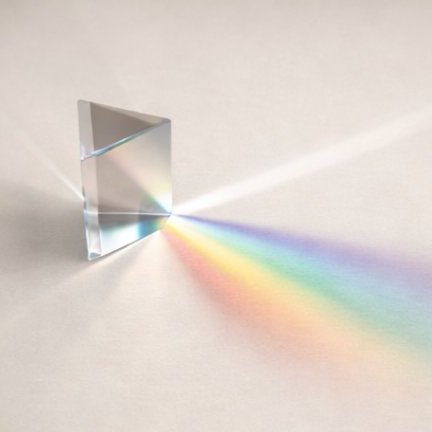
Every colour decision is a wager that the morning’s light will hit your clothes the same way the shop’s did. It usually doesn’t. The navy that read deep under halogens turns flat under fluorescents; the cream that photographed warm in your bathroom goes cold in daylight. None of that is your eye failing — it’s the light changing, and the cloth doing what it’s always done. To know why, you have to start with light itself. This is that pass.
Light is the strangest thing you’ll think about today. It travels as a smooth wave — oscillating electric and magnetic fields rippling through space — and arrives in discrete packets called photons. Both descriptions are true. Both are required to predict what light will do. Physicists call this wave-particle duality and have stopped trying to make it intuitive.
The ocean is the closest analogy that doesn’t lie. From far away the sea looks like rolling waves; up close it’s individual molecules. Light is continuous from a distance and granular up close, and the question of which it “really” is turns out to be malformed — nature was never required to pick one.
Each photon carries a specific amount of energy, and that energy is the one thing that determines the colour you see. Lower-energy photons read as red. Higher-energy ones read as violet. Everything in this article from here on is bookkeeping on what wavelengths the light is bringing in, and what surfaces are doing with them.
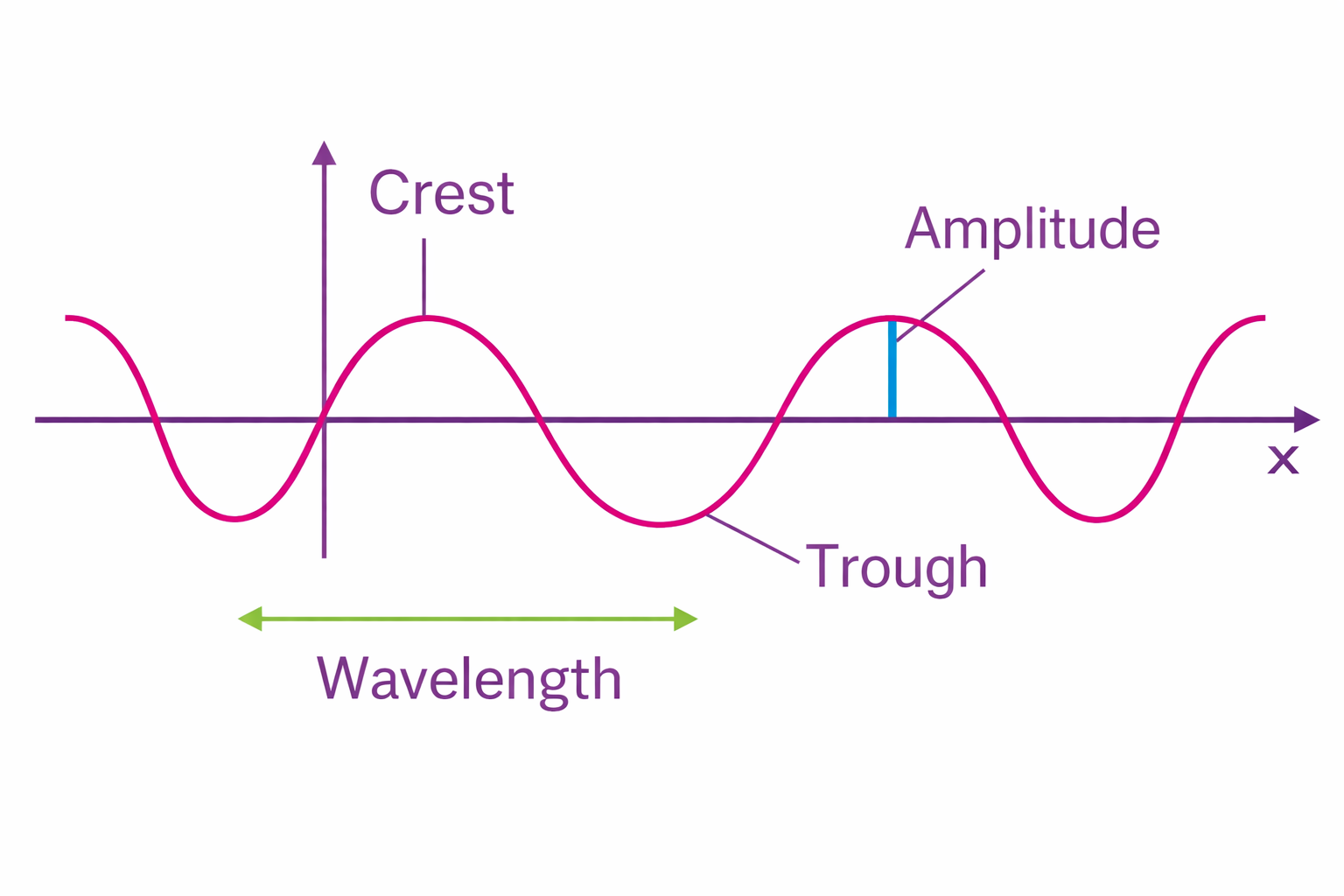
Visible light is a sliver. The full electromagnetic spectrum runs from kilometre-long radio waves at one end to picometre gamma rays at the other; everything we see falls in a band between roughly 380 and 700 nanometres. Outside that band the same physics is doing the same thing — your microwave heats food with photons, your dentist images teeth with photons. Our eyes simply happen to be tuned to the narrow strip in the middle.
Inside that strip the rule is simple: longer wavelength means lower energy means redder light. Red sits at ~700 nm and barely registers as energy at all. Violet at ~380 nm carries roughly twice as much per photon. The colours in between are a smooth gradient — there is no boundary where green stops and yellow starts. The names we use are conveniences laid over a continuum.
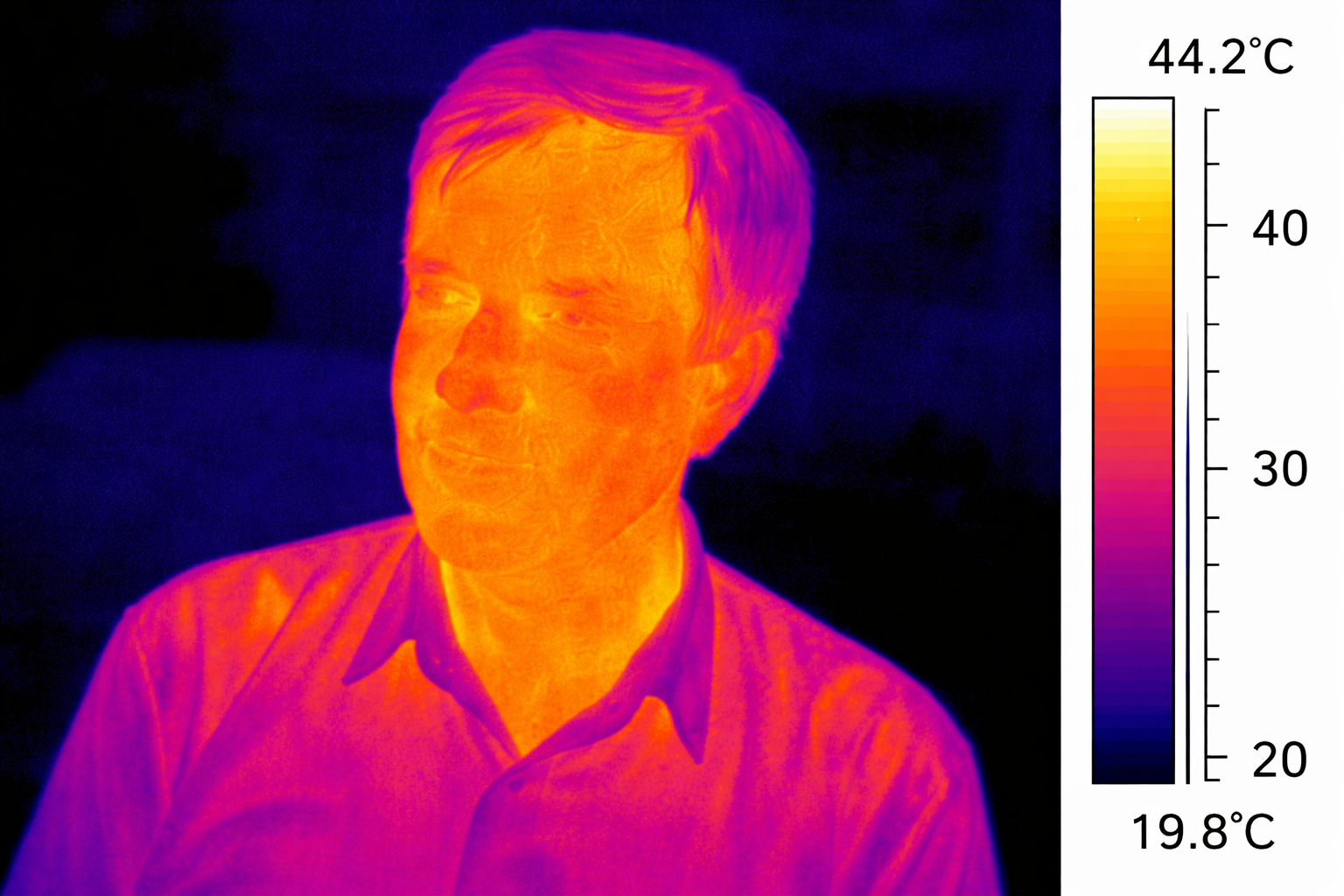
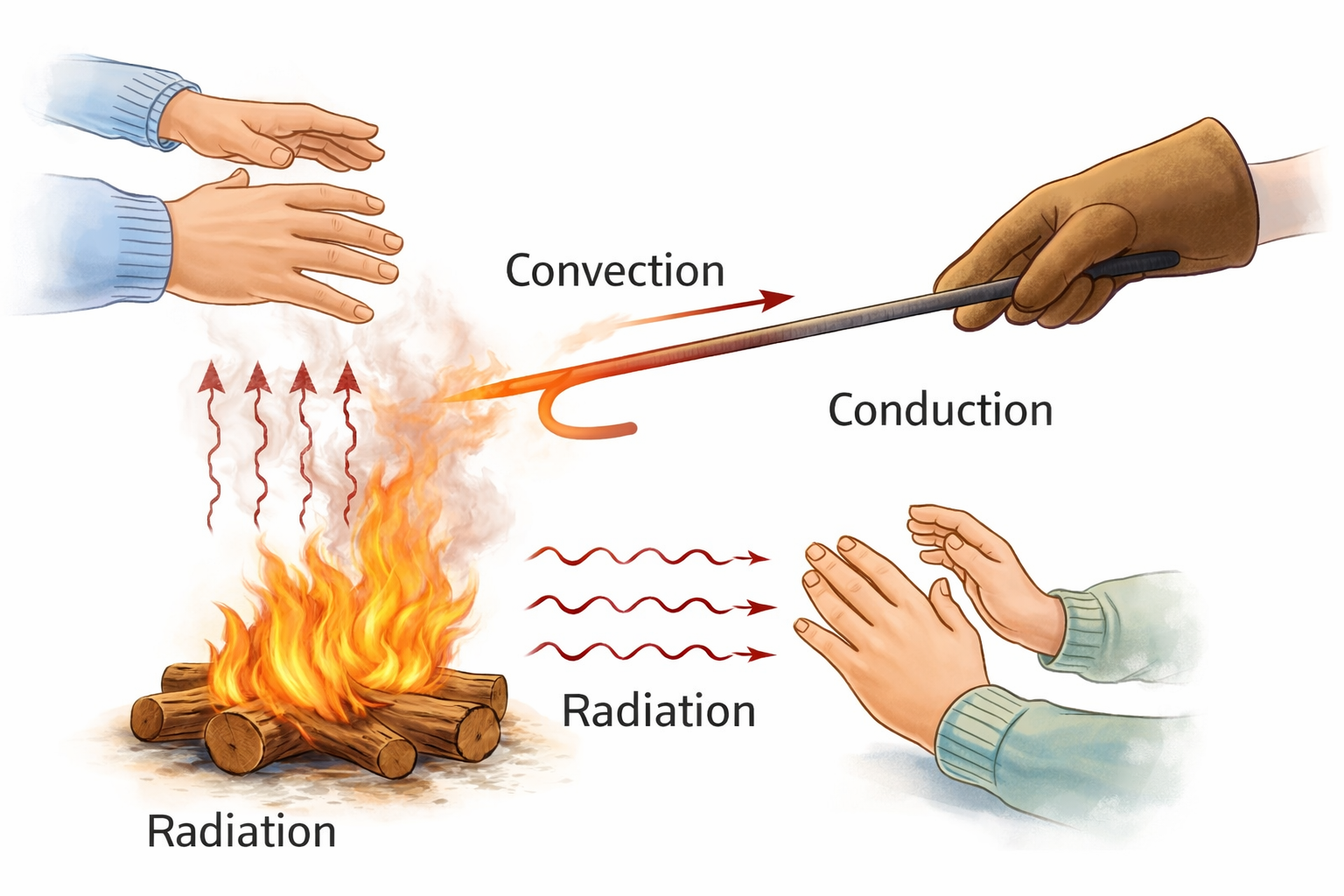
Anything with a temperature above absolute zero emits thermal radiation — electromagnetic waves whose peak wavelength depends on how hot the object is. You emit it right now. So does the chair you’re sitting on. Neither shows up to your naked eye because body temperature puts the peak emission deep in the infrared, well below the red end of what eyes register. A thermal camera picks it up immediately.
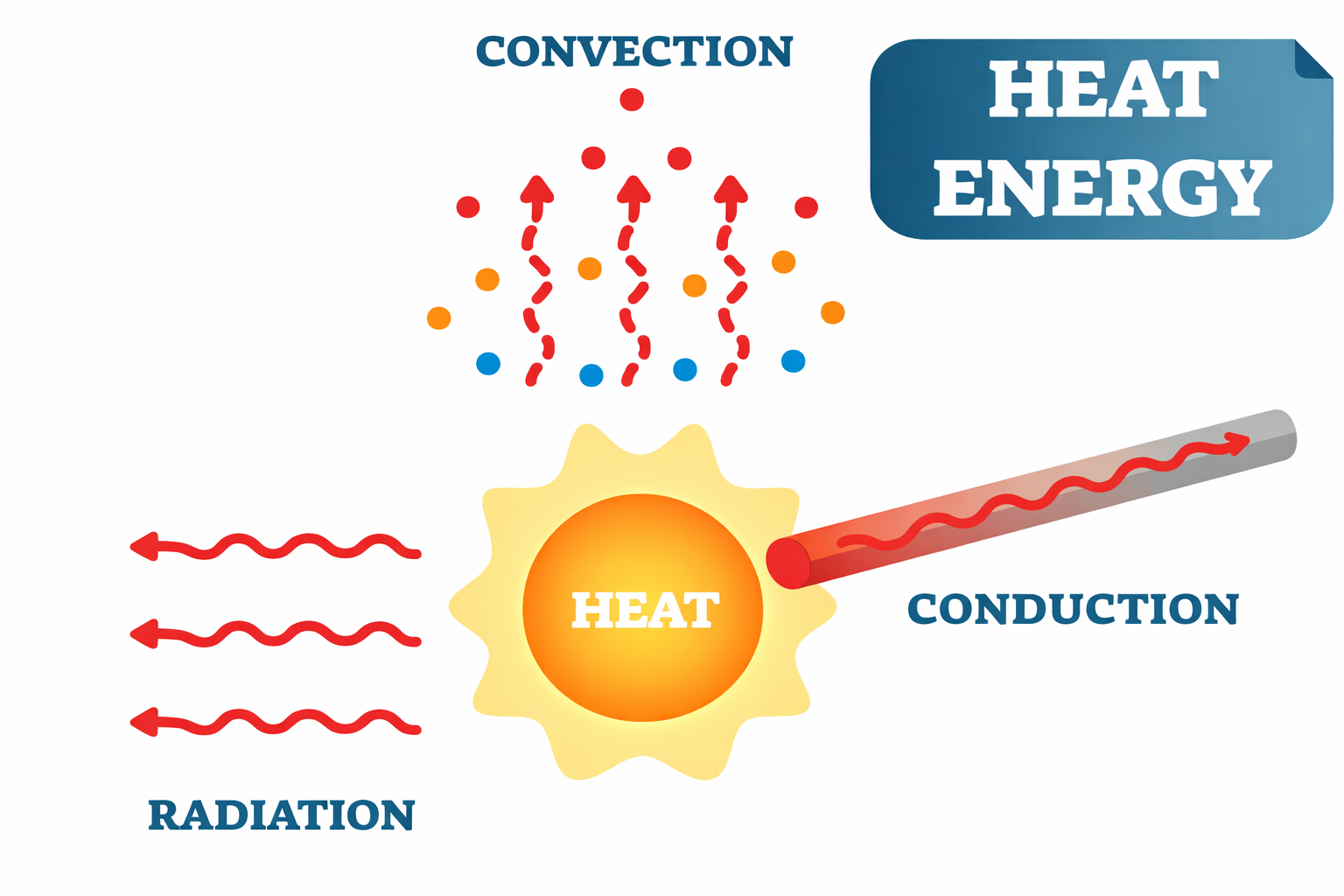
Push the temperature up and the emission shifts toward shorter wavelengths. Heat a piece of metal and it goes dull red, then orange, then yellow, then white, then bluish-white — not in random steps but along a precise curve, the same one for every object. Physicists call the idealised version of this object a black body, and the curve it follows is the foundation of every conversation about light temperature.
Which is why we rate light sources in Kelvin:
The naming is backwards from the everyday sense. In lighting, “warm” colours come from cooler temperatures and “cool” colours from hotter ones — a candle at 1,800 K is physically cooler than the harsh blue sky at 10,000 K. The labels are about the feeling, not the physics.
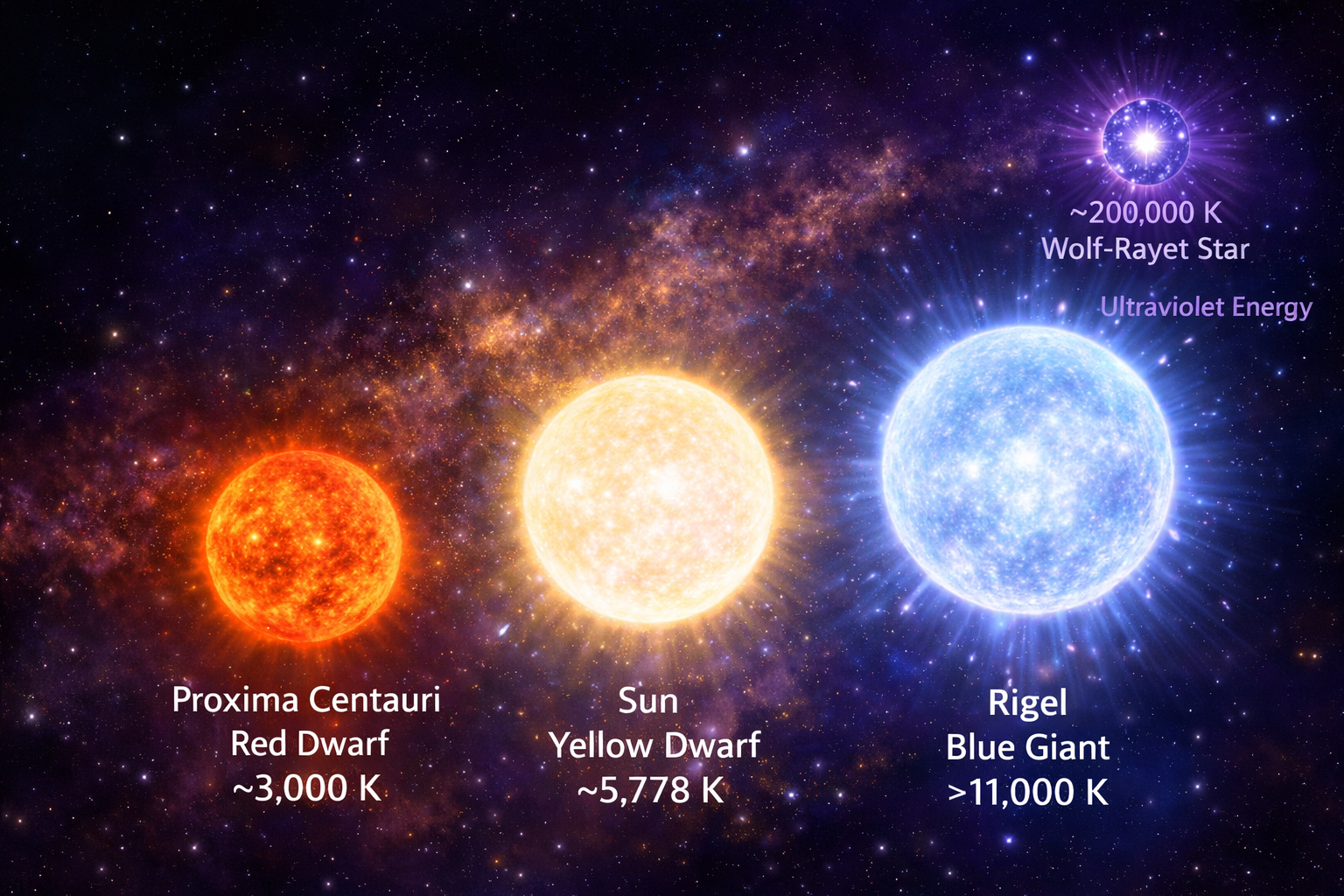
The same curve, scaled up, runs the stars. Stars are natural black-body radiators, and a star’s colour is a thermometer.
Proxima Centauri is a red dwarf at around 3,000 K — cool, by stellar standards, glowing the colour of a halogen bulb. Our Sun is a 5,778 K yellow dwarf and is in fact white when seen from space; the yellow we read into it is an atmospheric trick, the same one that turns the sky blue. Rigel in Orion burns at over 11,000 K and reads blue-white. The hottest known stars — the Wolf-Rayet class — exceed 200,000 K and dump most of their energy as ultraviolet, invisible to us. We see their leakage, not their main act.
Sunlight is white when it leaves the sun and roughly white when it hits the top of the atmosphere. By the time it reaches your eye it has been through a few hundred kilometres of nitrogen and oxygen, and those molecules don’t treat all wavelengths equally. Short wavelengths — blue and violet — bounce off them about five times more strongly than long ones. This is Rayleigh scattering, and it’s the reason the sky is the colour it is.
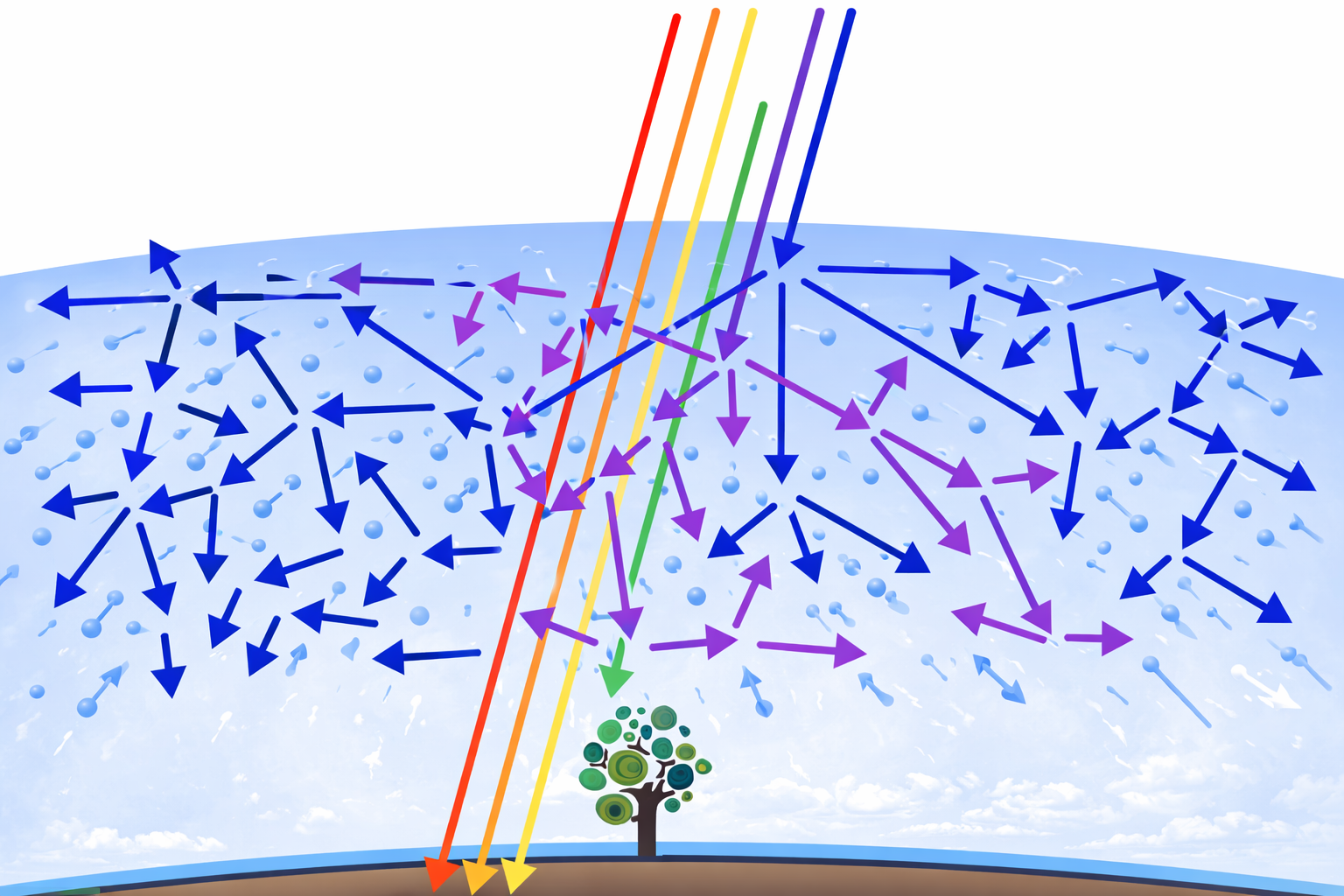
What you see when you look up isn’t the sun directly; it’s blue light that’s been knocked sideways by countless molecular collisions on its way through the atmosphere. The reason it doesn’t look violet, even though violet scatters more, is partly that the sun emits less violet to begin with and partly that our eyes are much less sensitive to that end of the spectrum.
The same physics paints sunsets red. At noon the sun’s light cuts through a thin slice of atmosphere; at the horizon it cuts through far more. Most of the blue gets scattered out along the way, and what reaches your eye is the long-wavelength residue — orange, then red, sometimes deep crimson when the air is thick with dust or humidity. The sky is blue because blue scatters easily. The sunset is red because red is what survives the trip.
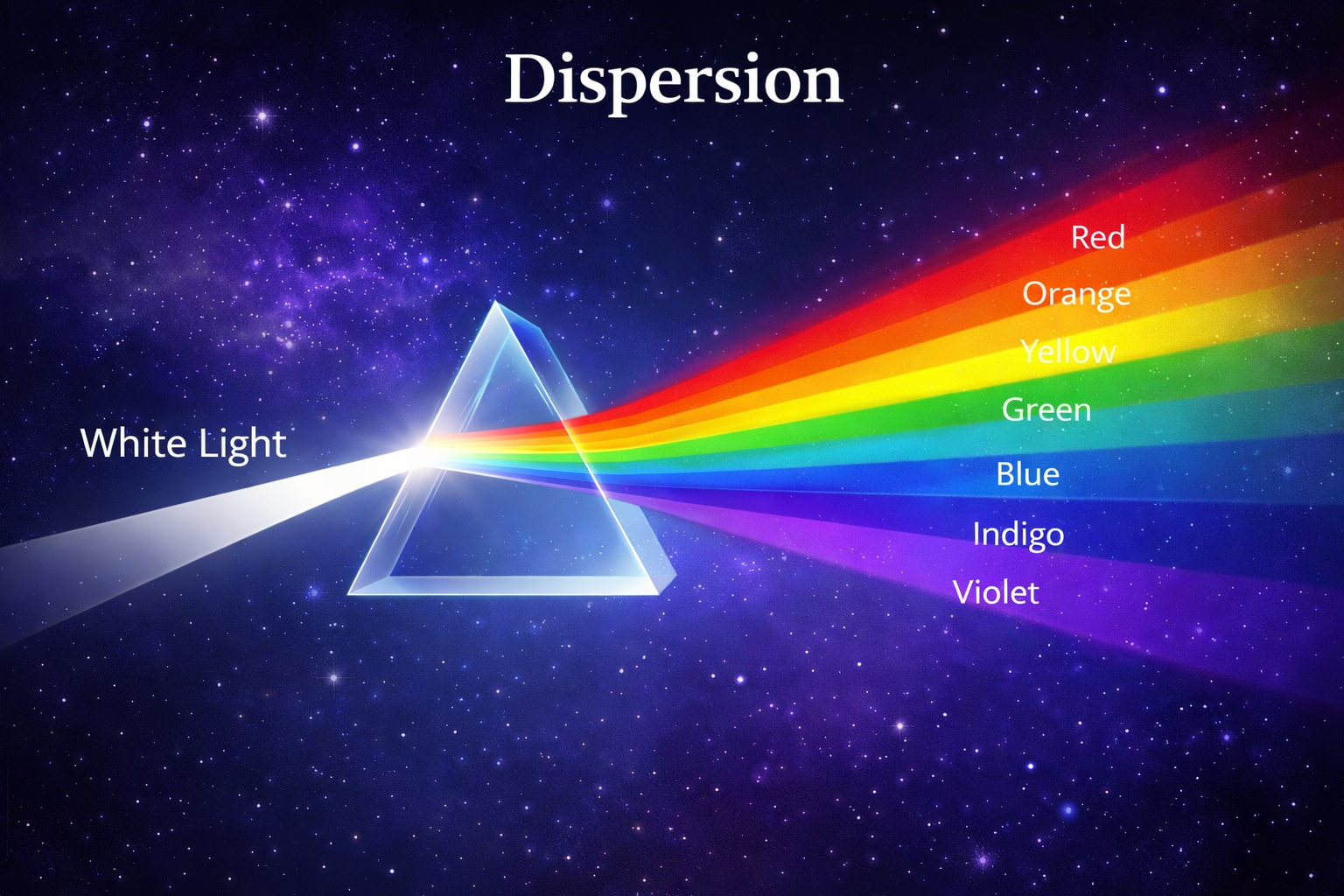
Glass slows light down — and it slows different wavelengths down by different amounts. Violet slows the most and bends the most; red slows the least. Send a beam of white light through a triangular slab of glass at the right angle and the wavelengths fan out into a smooth gradient: a rainbow. This is dispersion, and it was Newton in the 1660s who first showed with it that white light isn’t a pure substance — it’s a mixture of every visible colour, separable and recombinable at will.
Rainbows in the sky run the same trick on raindrops. Sunlight enters a drop, bends, reflects off the back, and bends again on the way out; each wavelength takes a slightly different path through the geometry. The arc you see is where those paths happen to intersect your eyeline at a consistent angle from the direction of the sun. Which is also why the centre of every rainbow points away from the sun, and why you’ll never catch one with the sun directly overhead — the angles don’t allow it.
Light leaves the sun white. The colour it ends up after bouncing off your shirt is the part the cloth didn’t keep. A red tomato isn’t generating red — it’s absorbing every wavelength in the spectrum except the ones near 700 nanometres, and sending those back to your eye. A navy blazer absorbs the warm two-thirds of the visible spectrum and reflects the cool blue-violet end. White wool reflects nearly everything. Black wool absorbs nearly everything. The colour of an object is, more accurately, the colour an object refuses.
This is why two fabrics that look identical under one light can look completely different under another. The shop’s halogen lamps emit a spectrum heavy in red and yellow; your office fluorescents skew cyan and green. Cloth A and Cloth B might reflect the same composite under halogen — but each is reflecting a different recipe of wavelengths to get there. Switch the light, change the recipe, and the match falls apart. The phenomenon has a name: metamerism. It is why you should never buy a suit jacket and matching trousers on different days, in different shops, under different bulbs.
Daylight is the closest thing we have to a neutral test — it contains roughly the full visible spectrum at roughly even amplitudes. Indoor light almost never does. The most reliable way to judge an outfit is to step outside; the second most reliable is to photograph it, since the camera averages across pixels and ignores your brain’s automatic colour correction.
Everything in this article up to here has been about the light itself. Everything in the rest of the encyclopedia is about how cloth, dye, eye, and brain cooperate — or don’t — with what the light brought in.
If colour is what an object refuses, Vantablack refuses essentially nothing. The material — invented by Surrey NanoSystems in 2014, the name short for Vertically Aligned NanoTube Arrays — absorbs 99.965% of visible light. It is a forest of carbon nanotubes packed so densely that photons enter, bounce between the tubes a few times, and have all their energy absorbed before they can escape. Coated objects lose every cue of depth and texture. They read as flat silhouettes, as if a hole has been cut into the world.
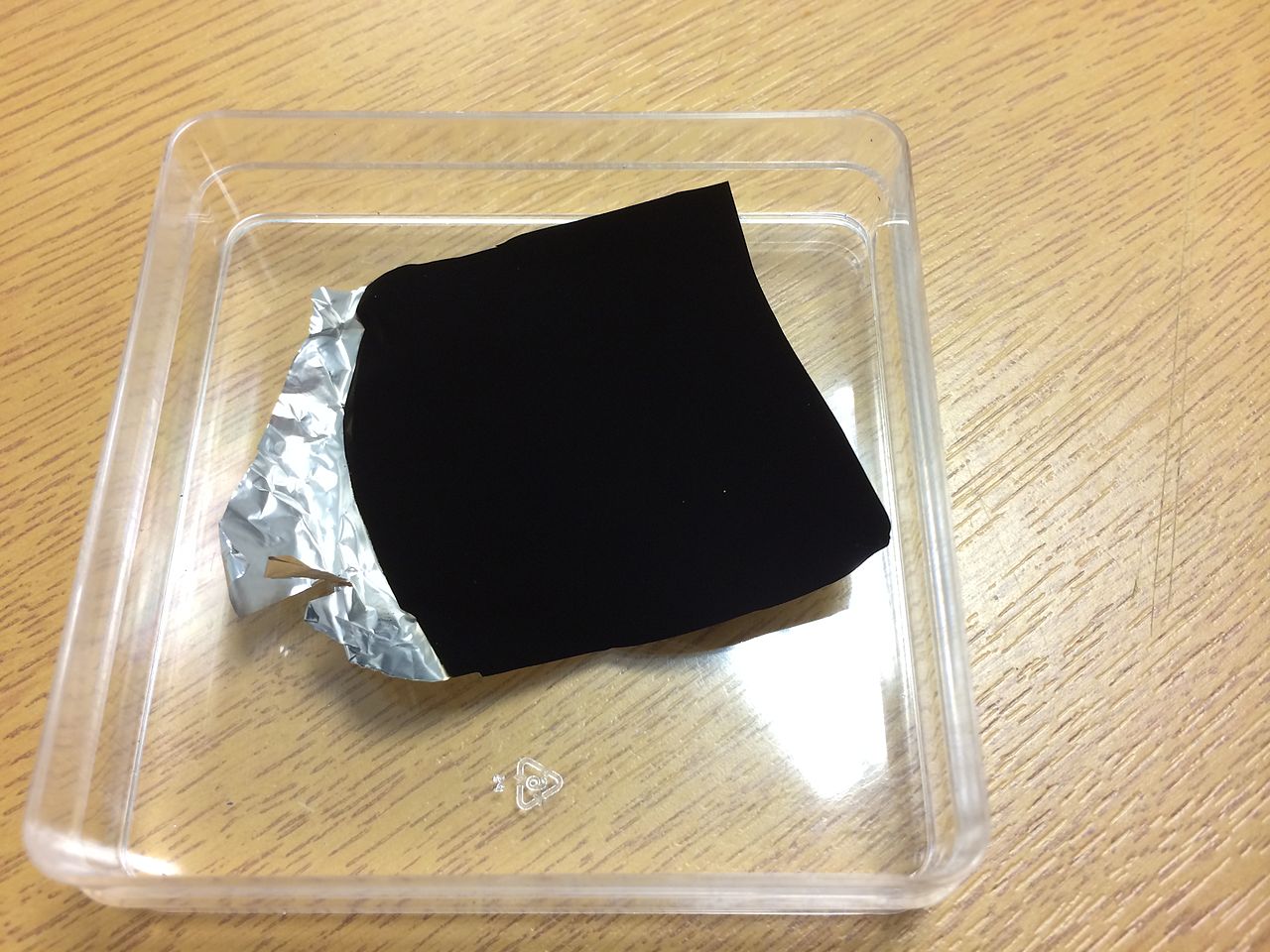
No real material is a perfect black-body absorber. Vantablack is the closest we’ve made.